


The Impact of the One Big Beautiful Bill on Medicaid
The One Big Beautiful Bill Act (OBBBA) was signed into law on July 4, 2025, laying out the fiscal agenda for the Trump administration’s second term. Its major overhaul of the Medicaid program through 2034 is at the top of home care leaders’ minds: according to the home care industry survey report commissioned by AxisCare for 2026, 45% of leaders said changes to Medicaid will have a very large or huge impact on their ability to scale.
In this piece, we’ll outline key provisions of the OBBBA and their potential implications for home care agencies, helping organizations better understand the policy landscape and make informed strategic decisions.
Overview of the One Big Beautiful Bill Act
The OBBBA’s main focus is restructuring federal tax and spending. One of its key provisions permanently extends the individual income tax rates originally established in 2017 and introduces new deductions for overtime and tips: specifically, a $25,000 deduction for tip income and a $12,500 deduction for qualified overtime pay. This is occurring alongside a $150 billion surge in defense spending and $140 billion for border security infrastructure.
As a counterbalance to the total estimated $5.9 trillion in tax reductions and spending increases, the bill proposes significant offsets. Both Medicaid and the Supplemental Nutrition Assistance Program (SNAP) are included in these proposed spending reductions: Medicaid funding is projected to be reduced by $1.1 trillion via the introduction of first-ever national work requirements, and the USDA Food and Nutrition Service has begun implementing between $200 billion and $300 billion in SNAP cuts.
Agencies that rely on Medicaid funding may experience reduced funding levels as these provisions are implemented. Additional economic effects may also influence home care demand. Some households may face increased financial pressure, potentially affecting their ability to pay for private home care services. As a result, providers may reassess expansion plans or adjust their service offerings depending on local funding conditions.
Key Medicaid Provisions in the Bill
- According to the Congressional Budget Office, Medicaid will be subject to a 12% reduction in federal spending, totaling roughly $911 billion in net cuts between 2025 and 2034. These changes may place additional pressure on reimbursement levels and administrative requirements for home care agencies. In total, 5 to 10 million people are forecasted to lose coverage due to these changes.
- The OBBBA legislates new mandatory work requirements to unlock Medicaid eligibility; adults aged 19 to 64 who are not pregnant, not disabled, and do not have children must complete 80 hours of work or community engagement per month. The CBO projects this requirement will save nearly $326 billion.
- States will now be required to check client eligibility for Medicaid services every six months, compared to just once per year pre-OBBBA. This increase in frequency is estimated to save the federal government $191 billion.
- The bill also bans new or increased provider taxes, while gradually reducing the “safe harbor” tax cap — a limitation on how much the state can tax healthcare providers to help cover their share of Medicaid — from 6% down to 3.5% by 2032. These restrictions are forecasted to reduce federal matching funds by $183 billion.
- Public Law 119-21 caps state-directed payments at 100% of Medicare rates for expansion states (110% for non-expansion states), all but eliminating many agencies’ opportunities to receive supplemental payments that previously bridged the gap between Medicaid costs and care delivery.
Implications for Home Care Agencies
The OBBBA introduces several financial and operational changes for home care agencies across the U.S., beginning with reduced state budgets. Historically, states have used provider taxes to fund their portion of Medicaid and unlock federal matching dollars. However, because these rates are scheduled to remain at 2025 levels, and the “safe harbor” threshold is on the decline, this revenue stream has become far less lucrative.
As states navigate these deficits, Medicaid Managed Care (MMC) is increasingly coming to the forefront. This model relies on contracts with private insurance companies to provide services, shifting the financial risk from state governments to private payers, who typically rely on stricter utilization management and prior authorization to support their profitability.
Operationally speaking, Medicaid-funded agencies may need to maintain care delivery while operating with tighter financial margins, all while freezing their expansion efforts due to a lack of resources. Limited reimbursement growth could also affect agencies’ ability to raise caregiver wages, potentially exacerbating hiring and retention challenges. At the same time, changes to SNAP benefits and other economic factors may affect household spending capacity, potentially reducing demand for private-pay home care services if households reallocate spending toward essential expenses.
Reimbursement Rate Reductions
For decades, states have taxed hospitals and home care agencies to unlock their federal matching dollars. The OBBBA effectively breaks this cycle by disallowing new or increased provider taxes and capping state-directed payments at 100% to 110% of Medicare rates.
According to the CBO, these restrictions on state financing will reduce federal Medicaid spending by $161 billion through 2034. Now that it’s harder for states to raise the necessary share of Medicaid costs to receive federal funding, they must roll back previously planned rate increases. Shortfalls of 3% to 7% are forecasted for the 2026-27 cycle, creating a larger chasm between the rates agencies need to cover their rising labor costs and the rates states can actually afford.
Even in non-expansion states like Texas, which are theoretically exempt from the “safe harbor” rate slump, the OBBBA’s moratorium on new taxes is affecting liquidity. Texas relies heavily on directed payments to fund home care, but under Public Law 119-21, states are no longer allowed to expand these programs or increase provider taxes to cover labor shortages.
Client Enrollment Disruptions
Between the new 80-hour work requirement and 6-month eligibility check cycle, the number of individuals eligible for coverage may decline. An estimated 1 to 2 million adults with disabilities are projected to lose coverage due to the monthly work rule, many of whom rely on Medicaid expansion for support at home.
Disabled clients who are exempt from the work requirement should theoretically be unable to lose their coverage. However, the need to reaffirm their exemption every six months may result in increased coverage interruptions, leaving agencies with empty care slots where a client still needs help but no longer has a valid billing code.
Caregiver Retention Challenges
Some caregivers may also be affected by changes to Medicaid and SNAP eligibility, further complicating agencies’ ongoing efforts around retaining caregivers amid the staffing crisis.
Changes to healthcare or food assistance eligibility could also affect caregivers who rely on these programs. Because caregiver wages are typically lower than many other occupations, some workers may consider alternative employment opportunities, including positions that benefit from the OBBBA’s deductions for tips and overtime.
Adaptation Strategies for Agencies
In the shadow of these OBBBA changes, home care agencies may consider diversifying revenue sources beyond Medicaid.
With reimbursement rates frozen, agencies may need to explore additional operational efficiencies to lower costs from other angles. Fortunately, the OBBBA made telehealth “safe harbors” permanent, meaning agencies can offer virtual care that falls within health spending account (HSA) eligibility. Telehealth can reduce the number of in-person checkups, which cost providers more than a simple online appointment.
What’s more, agencies that can prove they are reducing hospital readmissions through the TEAM Model (Transforming Episode Accountability) may be able to earn bonus income. This new program aims to enhance post-acute coordination between various healthcare stakeholders after specific interventions like spinal fusion and major bowel procedures.
Home care agencies that belong to one of these expanded care teams are often eligible for shared-savings bonuses awarded if the client does not visit the emergency room for a specified period after discharge. Agencies that enter into these agreements are also bound to generate additional referrals, given the financial incentive to collaborate.
On the staffing side of things, agencies may choose to highlight the OBBBA’s overtime tax exemption when discussing compensation with prospective employees. Without spending a single dollar of their own, agencies can highlight how overtime hours may result in higher take-home pay than in previous years, effectively offering a “raise” funded fully by the government.
Finally, all of these regulatory changes may increase administrative workload for in-office staff. Between learning the ropes and increasing administrative burdens (such as the 6-month eligibility check), agencies may explore automation to help manage paperwork and administrative requirements. AI-powered tools digitize countless daily touchpoints to free up precious time, allowing staff to focus on high-value, high-priority tasks that directly contribute to business growth.
Payer Source Diversification
Payer diversification strategies introduce new sources of revenue into the payer mix to offset Medicaid losses.
While lower-income households may experience increased financial pressure due to OBBBA-related policy changes, some households may experience tax savings. Specifically, individuals who benefit from overtime and tip-based tax deductions are ending up with thousands more in their pockets at the end of the year. Home care agencies might consider allocating a portion of their marketing efforts to target these households, capturing newly available disposable income among working-class families.
Meanwhile, VA billing is becoming an increasingly attractive revenue option for agencies. The VA has expanded its spending cap under the 2025 Elizabeth Dole Act, covering up to 100% of the cost of nursing home care (compared to 65% in previous years). Funding from this payer has also become more reliable: as of January 2026, the VA has shifted to one-year authorizations for many home care services, offering longer-term financial predictability in contrast to Medicaid’s shortened eligibility cycle.
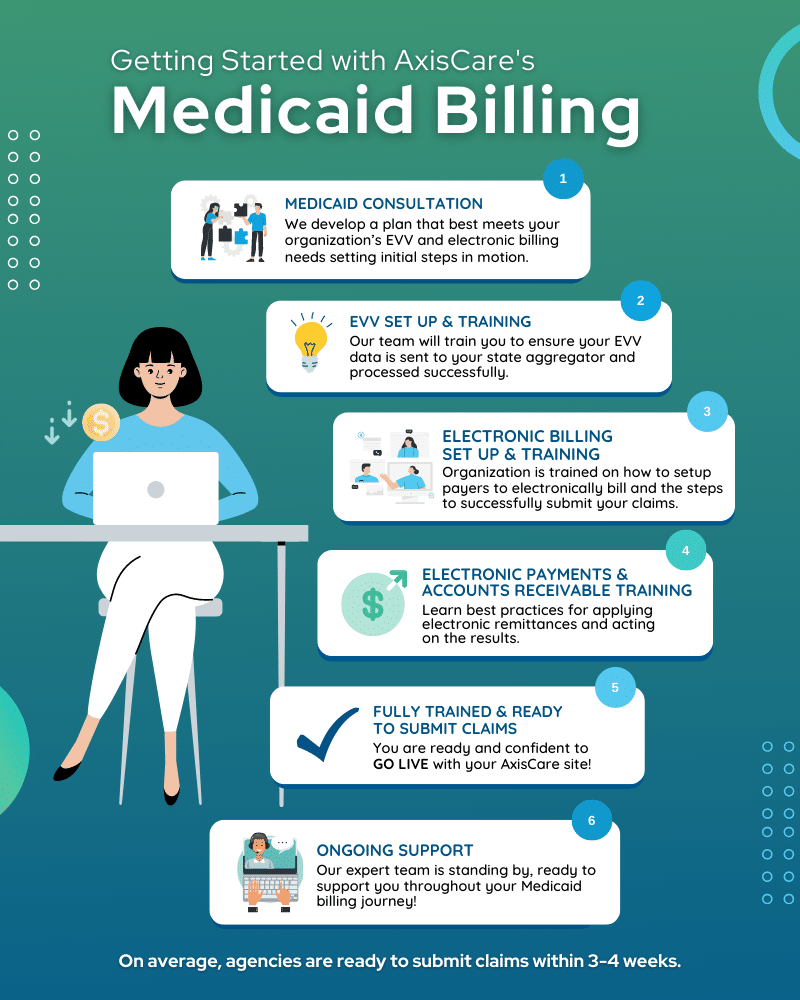
Whether VA-funded or otherwise, Electronic Visit Verification (EVV) remains a pillar of strong Revenue Cycle Management (RCM). Far from just a clock-in/clock-out system, EVV ensures every claim includes the six data points mandated by federal legislation, creating an audit-ready log that reduces errors and proves each client’s care is being delivered as it should be.
Broader Home Health Care & Economic Implications
The OBBBA modifies several coverage provisions that were expanded under the Affordable Care Act (ACA). Many subsidies that were previously used to expand healthcare accessibility were wound down by the end of 2025, which may increase out-of-pocket healthcare spending for some families in 2026 and beyond. At the same time, the bill’s strict Medicaid guardrails may result in some individuals no longer qualifying for coverage, either through changes to eligibility criteria or administrative verification requirements.
While low-income families will be affected disproportionately, these effects also ripple into Medicare and private plans. Older adults under the age of 65 will find it nearly impossible to afford private insurance without ACA subsidies, and doctors who provide Medicaid-subsidized care are also getting a pay cut. Until December 2026, Congress added a specific provision for doctors who serve Medicaid clients: a temporary 2.5% pay raise. For years, Medicare has been reducing its physician payment rates; this provision is intended to help offset financial pressures on providers, keeping their salaries steady for another year.
However, without a more permanent solution in place, some physicians may reconsider accepting new Medicare clients if reimbursement rates remain below provider operating costs. In this case, even those who qualify for the proper subsidies may not be able to find a doctor to help them.
Ensure Efficiency in Home Care With AxisCare
In the wake of the OBBBA, home care agencies may benefit from tools that help manage administrative complexity and operational efficiency. Our software is designed to remove administrative friction at every possible opportunity, returning precious resources to agency teams and paving the path to expansion. Request a free demo with our team and discover how we can help you navigate the changing Medicaid landscape.