Fall Prevention Strategies & Tips for the Elderly
Older adults can’t brush off a fall the way younger people can. As we age, our muscles and bones become weaker due to factors like osteoporosis, which increases our risk of fractures, head injuries, and the associated loss of independence.
Falling is also more common among older adults due to factors such as weakened vision and hearing, declining depth perception, and cognitive issues related to aging or medication side effects. What’s more, as the majority of American seniors prefer to age in place, their fall risk becomes even higher: items like rugs and improperly organized cords are tripping hazards that can spell trouble if left unchecked.
Since a fall is essentially guaranteed to send an older adult to the hospital, payers and families are increasingly expecting proof of fall prevention strategies. In this piece, we’ll cover the basics of in-home prevention, how technology can support these efforts, and why this is a critical focus for both home care agencies and clinical providers.
Understanding Fall Risks in Older Adults
Falls are more common among older populations for many different reasons. Age-related muscle loss – known as “sarcopenia” – reduces strength in the legs and core, making it harder to recover from a stumble. Reaction times can also be slowed by factors like cognitive decline or medication side effects, which also makes it more challenging to straighten back up after tripping over something.
Chronic conditions can increase someone’s fall risk by affecting mobility and stability. Arthritis can limit joint movement and cause pain that alters the individual’s gait, while diabetes may reduce sensation in the feet. Other complications, such as fatigue, impaired vision, or low blood pressure, can exacerbate these issues further.
Helping Create a Safer Home Environment
Creating a safe environment in the comfort of one’s own home is very doable. All it takes is a few small, inexpensive changes to reduce the risk of a fall or injury drastically.
Zero-Cost Modifications
Many helpful home modifications are completely free! They simply involve moving items around to boost accessibility: fastening rug edges to the floor, adding non-slip backings to loose rugs, rearranging furniture to create wider pathways, and decluttering high-traffic hallways are great starting points.
Improving lighting also goes a long way towards helping individuals with impaired eyesight, including brighter bulbs in hallways, staircases, bathrooms, and entrances. Placing night lights in bedrooms and bathrooms offers gentle assistance for after-dark navigation. Keeping frequently used items clearly visible and within reach prevents the need for overextending or standing on tiptoes, which can quickly throw someone off-balance.
Washrooms
The washroom can be a slippery place and therefore a very high-risk environment – especially when tiles and ceramics are the only surfaces available to catch someone’s fall. Grab bars near the toilet and tub provide individuals with something to hold onto at all times, and non-slip mats in tubs and showers are essential.
A raised seat can make it easier for people to get on and off the toilet, and shower chairs provide a safe, sturdy place for individuals to wash up without the risk of slipping.
Stairs
Railings along the wall and non-slip treads on each step are great for enabling balance and stability. If any steps are uneven, unstable, or missing any part of their structure, they should be repaired immediately. Making sure the edge of each step is clearly demarcated is equally important to avoid missteps; use contrast tape if necessary.
Flooring
Similar to stairs, any part of the flooring that is loose, missing, or uneven requires immediate repair. Cords should also be secured along the walls or upper baseboards to eliminate tripping hazards. In terms of footwear, shoes or slippers with grippy treads are ideal for preventing slips; walking across smooth floors while wearing socks should be strongly discouraged.
Assistive Devices
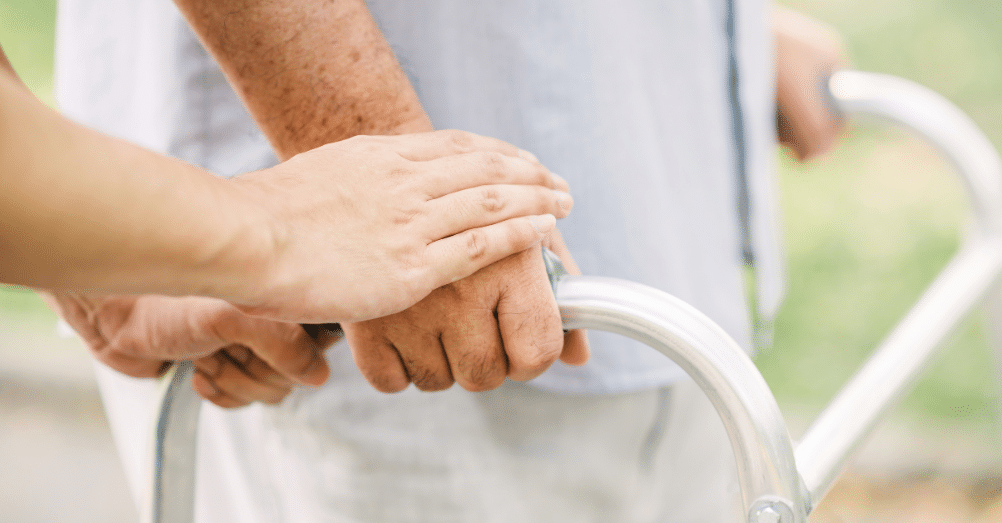
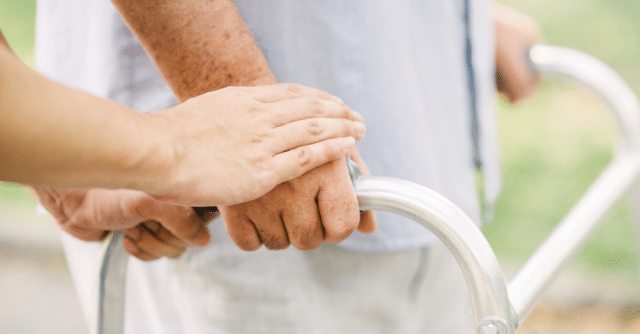
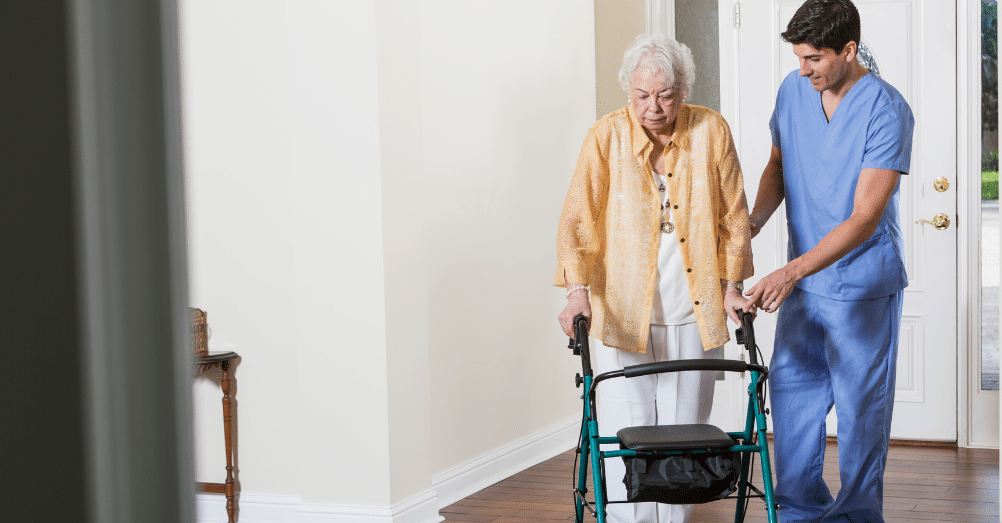
We all need somebody (or something!) to lean on. For older adults, a cane or walker is the ideal aid for fall prevention, helping them feel stable and confident as they navigate their space. If a fall does occur, an emergency alert wearable is the quickest way for an injured person to get the help they need at the press of a button.
Working With Healthcare Providers on Fall Prevention
Step one is setting up the home in a way that prioritizes risk reduction. The second layer of prevention involves collaborating with healthcare providers to develop a personalized fall prevention plan. Providers play a crucial role by reviewing medications for potential side effects, such as dizziness or low blood pressure, screening for balance and gait issues, and identifying vision or foot problems that may impact stability.
Once those clinical insights are noted and assessed, practitioners can identify the most prominent sources of fall risk and which interventions will have the most significant impact. These needs should be reassessed regularly, as prevention is an ongoing effort. Care teams should note changes in mobility, the effectiveness of prescribed exercises, and other risk prevention efforts, so they can adapt the plan accordingly.
Involving Family Members & Caregivers
Once a fall prevention plan is in motion, the responsibility is passed on to caregivers and families to uphold its recommendations. They are the ones who have the most face time with the client, which presents many opportunities to support fall prevention efforts further. For example, arranging transportation to medical appointments and monitoring for signs of dizziness or confusion.
Small, proactive steps, such as encouraging the use of assistive devices and helping individuals stick to their exercise schedule, can also prevent minor issues from becoming serious risks. On the whole, open communication is key to making these efforts effective: families and caregivers can check in with healthcare providers as often as needed to report any changes in mobility or behavior.
Technology & Community Resources for Fall Prevention
When a fall occurs, mere minutes can be the difference between a full recovery and life-altering complications. Remote patient monitoring (RPM) devices are the lifeline that connects clients to their caregivers, sending real-time health data to home care agencies and creating an alert as soon as an anomaly is detected.
Motion-activated lights, sensors, and medication reminder apps can all help mitigate risk factors that may contribute to fall risk. AxisCare offers all of these capabilities under one roof: our online portal keeps clients connected to their care at all times, and aggregates data from all RPM devices. It automatically notifies caregivers as soon as an incident occurs.
The Role of AI in Fall Prevention
Home care analytics make it possible to predict fall risk earlier and more accurately. Over time, agencies collect large quantities of information about risk factors and health outcomes. Then, they can use AI to quickly interpret the data, detect patterns, and identify subtle warning signs that may be missed during routine visits.
By analyzing patterns across multiple data points – including changes in mobility, frequency of near-falls, vital signs, and caregiver notes – AI can enable clearer clinical guidance and better day-to-day decision-making, shifting agencies out of a reactive mode and into a proactive one.
Put Your Fall Prevention Plan Into Action With AxisCare
Prevention begins with small but intentional modifications and is further supported by integrated software that helps predict falls and avoid hospitalizations. AxisCare has all the tools agencies need to help older adults live confidently on their own, including the caregiver mobile app, plus remote monitoring capabilities. Request a free demo with our team to learn more about how we can support your fall prevention efforts!