Checklist for Medicaid Application
What Is a Checklist for Medicaid Application?
Becoming a Medicaid-approved vendor is an excellent business decision for home care agencies. Payer diversification is one of the best ways to strengthen cash flows and bring in new clients, and Medicaid is the industry’s primary payer. It covered nearly two-thirds of U.S. home care spending in 2023.
As you step into this new chapter, it’s important to remain clear-eyed about Medicaid challenges, starting with the vendor application process.
Government agencies are notoriously meticulous when it comes to clean documentation. A single missing signature or outdated license number can trigger a revision, which can delay the approval timeline–often by weeks or months, depending on state and provider type.
To avoid getting lost in a sea of paperwork, use our Medicaid provider enrollment checklist. This step-by-step tool is designed to help you organize, track, and verify the documents and forms required for a successful submission.
Note: Requirements vary by state and program. Always verify the latest enrollment and documentation requirements with your state Medicaid agency and applicable CMS guidance before submitting.
Key Components of a Medicaid Application
There are four critical categories agencies should be aware of when applying for providership.
- Provider Enrollment and National Provider Identifier (NPI): This category establishes your agency’s unique identity within the national and state healthcare systems.
- Licensure, Credentials, and Site Details: These documents prove that your agency is legally authorized to operate and physically prepared to provide care for its clients.
- Tax, Financial, and Business Documentation: This section ensures your business is a legitimate legal entity capable of receiving government funds.
- Service-Specific and Compliance Forms: These items demonstrate that your agency meets federal and state safety and ethics standards.
Download the Medicaid Application Checklist
For a more detailed breakdown of the documents required for the above-mentioned categories, download a copy of our Medicaid application checklist. It’s customizable for different states and services and applicable for both initial enrollments and revalidations.
How to Use the Medicaid Application Checklist
1. Identify the Necessary Data for the Application
Start by identifying every piece of data you’ll need to include in the application. Different documents will need to be sourced from various departments.
It’s best to choose one individual from each team to provide the necessary paperwork. If you cast a wide net, you might end up with duplicate or even triplicate copies, which can get overwhelming fast.
2. Collect All of the Most Up-to-Date Documents Needed
As you collect documents, check the associated boxes once you’ve confirmed you have the most up-to-date version. If a professional license is set to expire in 30 days, don’t check it off. Instead, use the Notes section to flag it for immediate renewal.
3. Confirm Details Across Each Document
Also, make sure details like your business name, registration number, and state license match exactly from document to document. These small errors are enough to get your application kicked back for revisions. Once every box is checked and your documents are rounded up, do one last review for quality control.
4. Collect All Required Signatures
To confirm the packet is complete, collect the required signatures. All external forms should have either a “wet ink” or a valid digital signature as required by your state (stamped signatures are a common cause of rejection).
Once everyone has signed on the dotted line, send the submission to Medicaid through your state’s online portal.
5. Keep Track of Submission Dates
Immediately following submission, use the checklist’s Notes section to record your Application Tracking Number (ATN) and the current date for future reference and easier follow-ups.
If the state sends a Request for Information (RFI) due to an error or omission, use the checklist to track which document was questioned and the date you provided the updated paperwork.
After Your Application Is Accepted
Even after your application is accepted, keep this checklist safely filed away. In the event of a pre-enrollment site visit, having an organized tracking tool can help demonstrate your agency’s capacity for professionalism, administrative oversight, and compliance standards.
Best Practices for Medicaid Applications
Want to move fast and avoid the risk of an RFI? Follow these proven tips for minimizing rejections and getting enrolled as quickly as possible.
- Start Six Months Early: Between finding your business licenses, completing mandatory fingerprinting, and conducting site visits, six months is the standard for avoiding any gaps between opening your business and your first billable day.
- Consult State Medicaid Handbooks: While Medicaid is also governed at the federal level, it’s the state that creates the nitty-gritty rules. Each one has a handbook that is updated frequently, containing specific taxonomy codes, billing requirements, and service definitions.
- Use Secure Online Portals: Most states now require or heavily incentivize the use of online portals instead of regular mail. One major benefit is real-time validation, which prevents you from submitting an application with missing required fields.
- Track Every Communication: Create a dedicated Medicaid correspondence log that includes the submission date, your ATN, and the name of any representative you speak with on the phone. Assign one person to check your online portal every day for updates — specifically RFIs, so you can revise your application before they expire.
- Renew and Report Changes Within 30 Days: Providers typically must revalidate Medicare enrollment periodically (often every few years), but the schedule varies by state and provider type. Additionally, if you change your address, ownership, or managing employees, the new information must be reported within 30 days to avoid automatic deactivation.
Ensure Medicaid Compliance With AxisCare
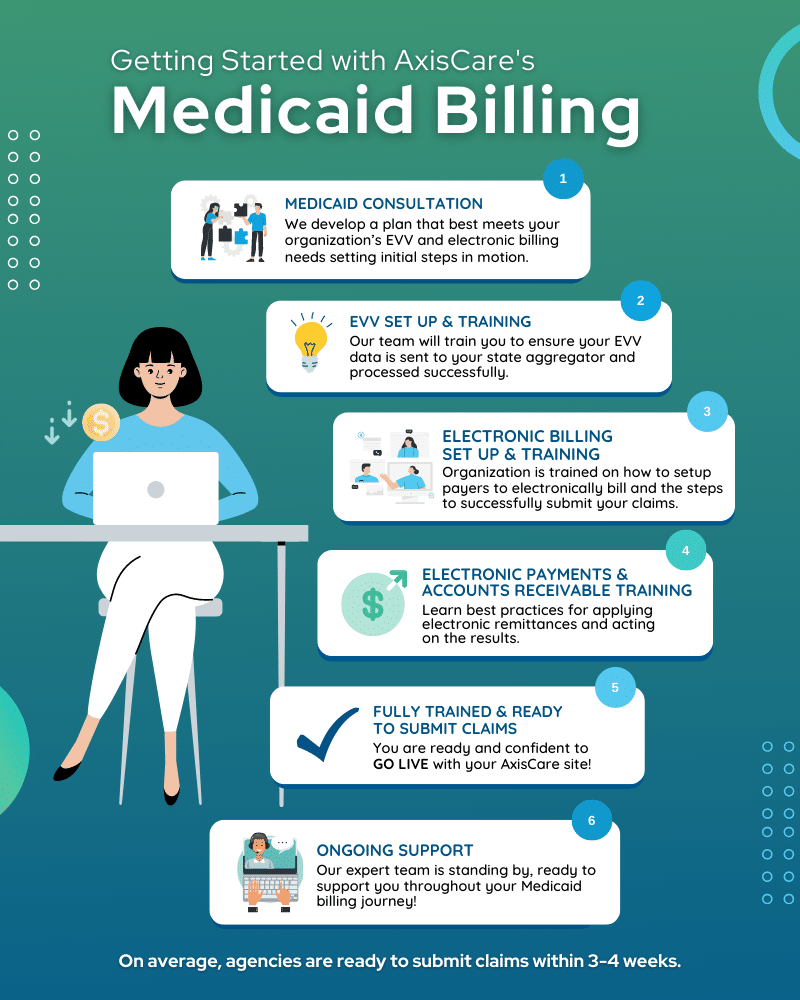
AxisCare is a leading partner for agencies working with Medicaid. We offer comprehensive service, submitting claims on behalf of our clients every single week and assisting with complex denials. By integrating directly with Medicaid’s systems, our platform is able to avoid many of the most common pitfalls that disrupt agencies’ cash flows.
Request a free demo to learn more about how we can help you get paid faster while taking admin off your plate.
Not part of Medicaid’s network yet? Get started on your application with our free checklist.