Key Takeaways
- Unlike retail, home care relies on long-term client relationships that create stable, predictable cash flows.
- The real growth limitation facing home care agencies isn’t market demand, it’s how effectively you can run your operations.
- Home care offers a more accessible startup cost compared to traditional brick-and-mortar franchises.
- An established franchisor will give families and referral partners a reason to trust your business, significantly reducing the friction associated with launching in a high-stakes industry.
- Tech platforms like AxisCare provide the visibility and automation necessary to scale your business.
Home care franchise opportunities offer a relatively approachable entry point into a market fueled by America’s aging population. This category, defined broadly as professional non-medical or skilled support delivered in a client’s home, can be a pathway to predictable, recurring revenue as long as market fit is achieved. The following benefits will help you determine whether franchising a home care agency is a good fit for your business vision, and consider both the advantages and challenges of entering this industry.
Why Home Care Franchise Opportunities Are Gaining Attention
Demand for services that support aging in place have skyrocketed in recent years. According to Pew Research, 60% of older adults (65 and up) say they would prefer to stay in their homes and receive caregiving assistance. AARP has pinned that number at 75%. Just 18% of respondents in the Pew survey said they would want to transition to an assisted living or nursing facility.
The overarching trend is clear: most aging Americans want to live out their golden years in the comfort of their homes and communities. What’s more, home care agencies are increasingly offering non-medical services, such as assistance with grooming, shopping, and bathing, that further enable older adults’ independence.
Investing in a home care franchise offers a unique crossover between enjoying scalable growth and creating social good, making it an ideal choice for entrepreneurs who measure success by both ROI and community impact. It also creates opportunities for home care business expansion into new territories, allowing owners to meet rising demand in underserved communities. By leveraging an in-demand business model driven by aging demographics, owners can build a stable business while directly improving seniors’ quality of life.
The Category Appeals to Buyers Looking for Purpose & Profitability
In Pew’s study, many of the older adults who expressed a preference for aging at home weren’t confident they would be able to do so. This presents potential franchisees with a two-pronged opportunity for success. First, they can stack the profitability odds in their favor by capturing existing market demand for at-home care. Second, they fulfill a profound social purpose by bridging the confidence gap identified in the Pew survey.
Benefit 1: You Enter a Market With Strong Long-Term Demand
In 2020, about one in six Americans were aged 65 years or older, compared to just one in 20 in 1920. The Baby Boomer wave has entered its senior years, creating a massive, structural need for specialized support. While the demand is crystal-clear, it should not be mistaken for a “set it and forget it” investment: the home care industry is defined by several operational challenges, and it takes strategic execution to open a winning franchise.
With caregiver turnover rates hovering around 79%, owners are primarily concerned with recruiting and retaining a high-quality workforce. Modern clients also expect real-time transparency through EVV (Electronic Visit Verification) and AI-driven scheduling tools, meaning owners must offer digital-native experiences to remain competitive. Meet these major criteria and you’ll find yourself with a lucrative opportunity at your fingertips that offers excellent long-term potential.
Benefit 2: You Start With a Proven Business Model
When you franchise, there’s no need to start from scratch or navigate trial-and-error business development. You’re opening your doors with a proven blueprint in hand and an established operating framework that includes everything from HIPAA-compliant documentation to EVV systems.
In terms of day-to-day agency management, the franchise model means you’ll never have to establish back-office systems. No need to wonder how to vet a new hire or structure a client assessment: those workflows will already be optimized and embedded in your home care software.
Benefit 3: You Gain Training & Ongoing Franchise Support
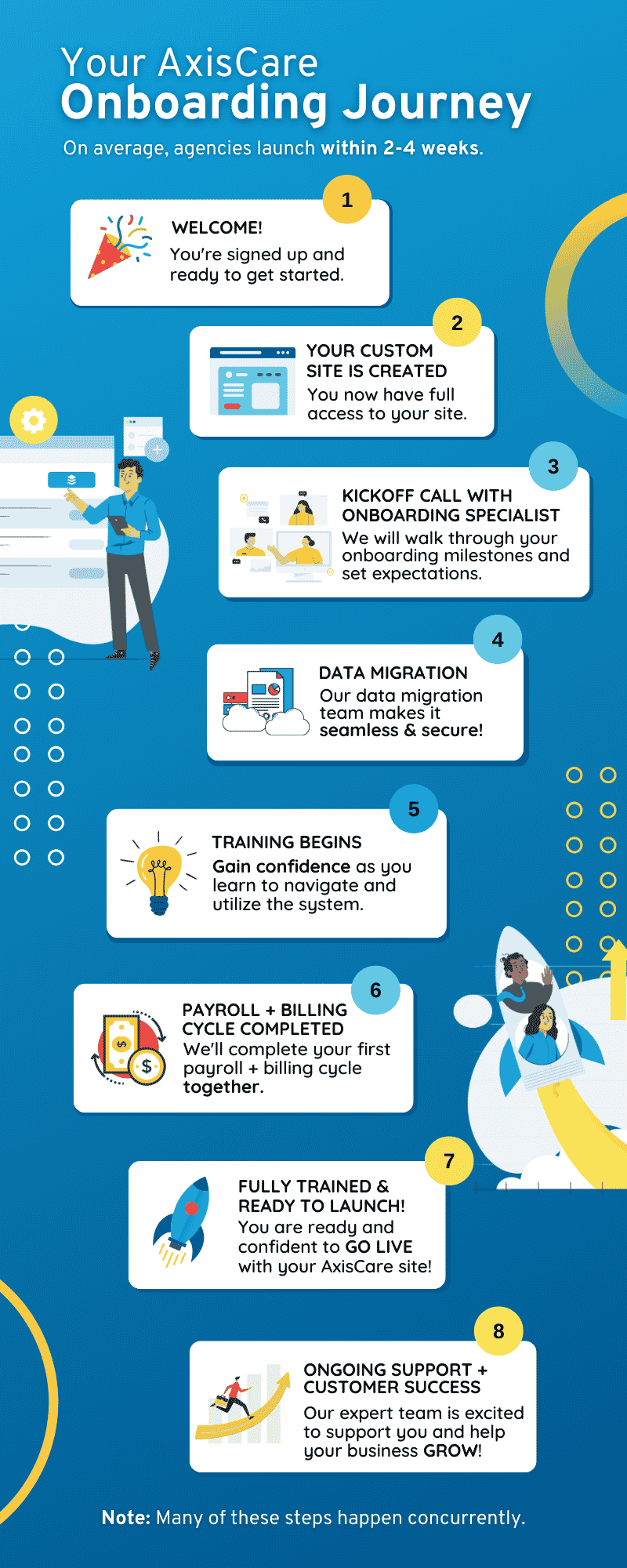
Instead of teaching yourself the nuances of home care licensing or payroll taxes, franchisees follow a standardized onboarding process that provides a baseline of key knowledge. From day one, you’ll know how to communicate with medical professionals and families with confidence, and stay on target with compliance rules.
Beyond launch day, further coaching and centralized resources help owners navigate the challenges of agency management with greater ease. For example, they may have access to proven creative assets and SEO strategies tailored specifically to the home care vertical, instead of creating their own marketing materials from scratch.
Ongoing Support Matters After Launch
Ongoing support provides critical assistance for more complex scenarios that may not be covered in basic training modules, such as handling an insurance audit or integrating new telehealth monitoring tools. Niche situations are bound to pop up over time, and a connection to a larger home care network means owners have access to a pool of knowledge they’d otherwise need to create themselves.
Benefit 4: Home Care Can Generate Recurring Revenue
Businesses that deliver medical services are only needed during acute interventions, whereas home care services are typically built into clients’ daily lives. This creates a stable base of revenue, allowing owners to forecast cash flow and manage overhead with a higher degree of accuracy.
Owners can support client satisfaction and, therefore, lock in long-term business in a few different ways. Caregiver continuity lays the groundwork for bonding between clients and staff, whereas inconsistent staffing assignments usually lead to churn. Consistency in clinical and non-medical support helps rally against hospital readmissions, and reliable scheduling means no client will ever be left hanging.
Benefit 5: Startup Costs Can Be Lower Than Other Franchise Categories
Home care franchises often have a lower barrier to entry compared to other industries. For example, a typical fast-food franchise might require between $500,000 to $1 million in initial investment for real estate, industrial equipment, and inventory. Because caregiving services are delivered in clients’ homes, owners can often launch with a small administrative office or even a setup in their own homes.
However, “lower cost” isn’t the same as “no cost.” Your upfront investment will depend on factors like geography and licensing, as state regulations can significantly impact speed-to-market. And while agency owners may not be purchasing physical inventory, they will need to pour a significant amount of their startup budget into human capital, caregiver payroll, and recruitment.
Benefit 6: You Can Build a Business That Serves a Real Community Need
Home care franchises generate value by answering a logistical and emotional question for families: how do we strike a balance between necessary support and self-affirming autonomy? Agencies shift the care burden away from family members, who would otherwise face long-term burnout and mental strain. This way, time spent together can remain focused on relationships rather than task management.
From a community perspective, agencies provide flexible, reliable employment for a diverse workforce. They also reduce the burden on local healthcare systems by preventing unnecessary emergency room visits and hospital readmissions.
Benefit 7: Brand Recognition Can Help You Build Trust Faster
Home care agencies ask families to invite strangers into their vulnerable loved ones’ homes. Working with an established brand can put their minds at ease, providing the credibility and social proof that builds trust. Medical referral partners will also associate known agency brands with national standards, vetted protocols, and professional accountability. In a competitive hiring landscape, caregivers are more likely to apply to a recognized name that implies stable payroll, formal training, and career progression.
Local franchises can leverage this initial trust to gain momentum in their communities, but excellent reputations are built over the long term. If your services fail to deliver on the brand’s promise, your business will churn through clients and caregivers alike.
Benefit 8: Technology Can Improve Operational Efficiency as You Grow
You can’t have growth without demand. But in the home care space, demand is not enough to guarantee success. Without strong operational infrastructure, rapid expansion can collapse into administrative chaos that eventually compromises care. Franchisees must move beyond manual tracking if they want to manage a growing roster of clients and staff, complete with tools that offer real-time field visibility while standardizing documentation.
Efficient Scheduling & Staffing Support Better Service Delivery
The more clients you bring on board, the more caregivers you’ll need, creating an increasingly complex matrix of client-caregiver matching. Technology can directly support service quality by streamlining caregiver coordination: automated scheduling reduces travel times and improves shift assignments, removing human bias from the equation to optimize appointments solely based on location, preferences, and availability.
Better Visibility Helps Owners Make Stronger Decisions
Reporting gives owners insight into the health and efficiency of their agency’s operations in real time. A single dashboard can provide an overview of caregiver performance and client satisfaction across a high volume of shifts, helping identify operational bottlenecks such as frequent late arrivals or documentation gaps.
Benefit 9: A Home Care Franchise Can Offer Room for Expansion
Agencies can expand in so many directions, starting with referrals. Once your reputation has been established, one of the most stable and lucrative sources for client leads is through hospital discharge planners, geriatric care managers, and local physicians. As your business grows, formalizing your recruitment funnel should become a top priority, alongside caregiver retention efforts to ensure you have the capacity to meet demand.
Territory expansion is another long-term growth strategy. Many successful owners eventually acquire businesses in nearby towns or build multi-unit portfolios to grow their market share. The key is to transition from an owner-operator model to a leadership role, supported by a dedicated operations manager. Without delegation, the logistical challenges of managing a larger staff roster and broader geography can degrade care quality.
Benefit 10: You Can Combine Entrepreneurial Independence With System Support
Franchising appeals to people who want to explore entrepreneurship and manage their own teams without the “startup” level of risk. By leveraging established systems, owners can focus on strategy and community networking instead of reinventing the foundational elements of home care.
That being said, it’s impossible to completely eliminate risk when you’re embarking on a business journey. While the franchisor provides the tools, the franchisee is solely responsible for on-the-ground success. You’ll have to hire effectively, foster a culture of care, and maintain the operational discipline required to turn a proven blueprint into a thriving local agency.
What Prospective Owners Should Evaluate Before Choosing a Home Care Franchise
Aspiring home care agency owners must evaluate whether their skills align with the industry’s operational demands, conducting a due diligence phase that focuses on long-term viability.
- Evaluate the territory in which you’re aiming to open a franchise not just by total population, but by the concentration of older adults and the median household income. Private-pay home care often requires out-of-pocket spending.
- To ensure you’re aligning with the right brand, connect with other franchisees to understand how they’ve been supported. How quickly does headquarters respond to a staffing crisis? Do they provide recruitment funnels for caregivers? Is there a clear onboarding plan for new owners?
- In the current market, growth isn’t capped by client demand. Caregiver availability is the squeeze. Ask yourself if you’re ready to manage a high-turnover workforce, and investigate whether the franchisor provides tools to help you stand out as a preferred local employer.
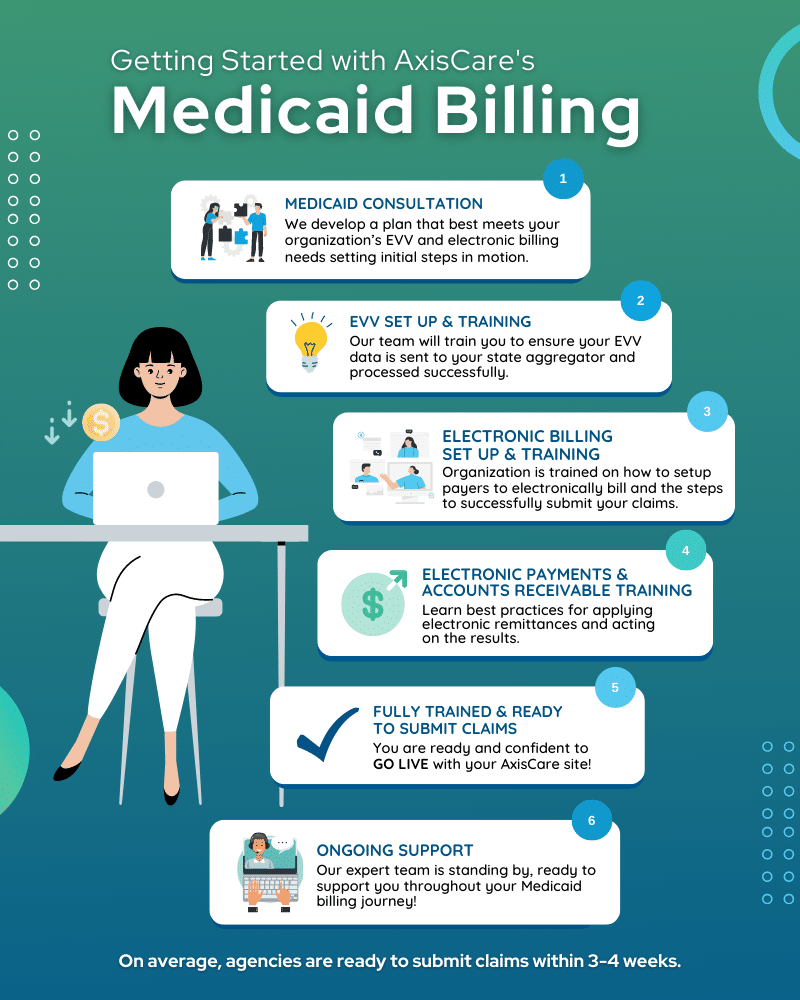
- Home care is a heavily regulated sector with rules that vary by state, so the franchisor should make it easy for local branches to stay compliant. A unified operating layer that handles Electronic Visit Verification (EVV), HIPAA compliance, and audit preparation is a huge advantage, eliminating the need to align multiple disconnected platforms.
Review the Franchise Model Beyond the Sales Pitch
Look past high-level marketing to get a clear picture of who you’re working with. The Franchise Disclosure Document (FDD) will break down recurring fees and the depth of support provided. Validation calls with existing franchisees will provide insight into whether the brand’s training and technology add value or simply add more friction to the process.
Scale Home Care Franchise Growth With AxisCare
Scaling with confidence requires a platform built for high-growth environments. Home care franchise growth with AxisCare is driven by a system designed to support multi-location expansion, operational visibility, and sustainable performance at scale. AxisCare is a strategic partner in this journey, providing the infrastructure needed to transition from manual inputs to data-driven operational excellence.
Unlike a generic CRM or management software, AxisCare is designed around the specific pain points that affect home care organizations across the United States. Every feature, from advanced scheduling to integrated billing, is made to reduce the administrative burden placed on home care teams and yield cleaner claims that keep cash flows rolling smoothly.
Agencies like SYNERGY — the fastest-growing franchise in the United States — choose AxisCare for how it empowers owners to make data-driven decisions. Through real-time reporting, our platform offers visibility into caregiver performance and client satisfaction across multiple territories. They also appreciate our interface’s intuitive setup, making it easy for teams to quickly pick up on key features and smoothly integrate new workflows into their daily lives.
FAQs
As the American population ages, demand for in-home care will continue to rise, making franchising a very promising opportunity. However, an agency’s success will ultimately depend on local market demand, staffing, retention, and operational excellence.
Opening a franchise generally requires an initial investment ranging from $100,000 to $300,000. The most pared-down models can start as low as $65,000, while premium medical-grade agencies can exceed $500,000. Startup costs will vary by model, territory, licensing, and staffing requirements.
High demand for services, recurring revenue potential, franchise support from a vetted vendor, and lower overhead compared to startup-style businesses can all lower the barrier to entry for owners.
Before purchasing, evaluate whether the territory has a critical mass of older adults. Ask about the franchisor’s support for caregiver recruitment, ensuring the model is backed by scalable technology like AxisCare. Also analyze the depth of ongoing operational training and the robustness of their compliance frameworks.
Integrated technology provides the operational visibility and scheduling tools required to eliminate administrative bottlenecks that stand in the way of expansion. By centralizing staffing coordination and reporting, owners can deliver consistent service and meet high compliance standards, turning operational data into a strategic advantage for sustainable growth.