

Addressing the Caregiving Shortage in Home Care: Insights & Strategies
Introduction
The United States home care industry is up against a web of converging challenges. First off, the country’s population is aging: as of the most recent census, 16.8% of Americans were 65 years of age or older, and this demographic group is growing faster than ever before. This “silver wave” also has a preference for aging in place, with 77% of older adults wanting to remain in their homes if given the choice.
These factors combined have created a spike in demand for home care services, leaving agencies in a tight spot. The median turnover rate for caregivers is currently hovering around 80% within the first 100 days of being hired, meaning agencies are stuck at the nexus of increasing client needs and extremely high employee attrition.
Agencies have no choice but to go through the hiring cycle again and again, dedicating significant resources to attracting, vetting, and onboarding talent only to lose the majority of them in a matter of months. It’s a taxing process that ultimately leaves clients underserved and organizations stretched incredibly thin.
Understanding the Caregiving Shortage
The caregiver shortage affects every corner of the home care industry, no matter the region or specialization. As demand for at-home caregiving rises, it’s only logical that agencies will need a deeper roster of well-trained and qualified employees to meet their needs. However, the additional challenge at play is the fact that these roles are uniquely demanding in many different ways, accelerating the burnout process and leaving agencies short-staffed.
Caregiving is a uniquely emotional job that serves some of society’s most vulnerable people. Spending your days helping individuals with chronic conditions, physical limitations, or who are generally not well can take a toll on a caregiver’s mental health and ultimately become too heavy of a burden to continue. Since shifts are scheduled around clients’ availability, this work often includes night shifts, overtime hours, and other irregular requirements that are far less consistent than a nine-to-five.
Pay is also a sticking point for many in the caregiving field: despite the role’s mentally and physically demanding nature, the average base salary for a US-based caregiver is less than $17. The same is true regarding benefits like health care, child care, and other on-the-job perks. Given these challenges, many caregivers simply choose to transition to a lower-stakes job with a more predictable schedule.
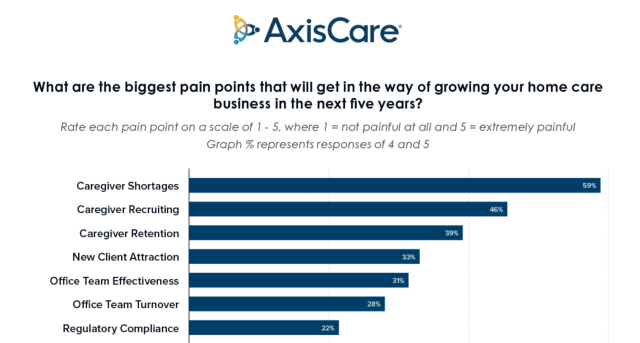
The Caregiver Shortage: Agencies' #1 Concern
Impact on Care Recipients
When there aren’t enough employees to go around, care gaps begin to form, and clients may be left without essential services. They may receive less one-on-one time during visits, leading to rushed or incomplete care, and may be subject to longer wait times between appointments. This is especially true for individuals who have more complex needs, such as dementia or mobility issues, and require practitioners with a specialized set of skills.
As much as schedulers may try to squeeze overtime out of their existing roster, it’s rarely enough to cover the necessary hours. In these cases, it’s only a matter of time before agencies begin to experience client attrition; if their needs are not being met, they will likely choose another provider with more resources.
Strategies for Addressing Caregiver Shortage
If home care industry trends pan out as predicted, the caregiver shortage isn’t going anywhere. The demographic and economic factors at the root of these gaps are complex and deeply rooted, requiring agencies to find their own solutions on an organizational level.
Recruitment & Retention
Maintaining a loyal team of employees begins with caregiver recruiting. Getting the right talent through the door from the very beginning will avoid common pitfalls like hiring underqualified or unaligned people – in other words, individuals who are bound to be an improper fit.
When creating a job posting, provide a transparent description of the role, including a detailed breakdown of candidates’ qualifications and a realistic overview of on-the-job expectations. At the same time, remember that an overly restrictive summary will ward off qualified individuals who tend only to apply to postings where they can check every box. Agencies might also consider paid trial periods to evaluate new hires’ skills before committing to the full onboarding process, while still fairly compensating them for their time.
Once employees are through the door, retention is the name of the game; treat your staff well and they’ll have no reason to look elsewhere. Perks like flexible scheduling, longevity bonuses, subsidized continuing education, and childcare benefits all work to differentiate your agency from the others and express gratitude for everything caregivers do for their clients.
Training & Skill Enhancement
Stagnation is a key reason for team members to begin looking for other work, so providing caregiver training beyond initial onboarding is a great way to keep them engaged. For example, workshops to build specialized skills that open caregivers up to new opportunities within the organization, like caring for higher-needs clients.
Offering ongoing training also signals caregivers that their growth and expertise are valued, boosting morale and loyalty. This not only helps retain experienced staff but also strengthens the overall quality of care provided, as caregivers become more confident and skilled in handling diverse client needs.
Support Programs for Caregivers
Caregiver support programs, such as respite services and support groups, provide much-needed relief for caregivers who may feel isolated in their day-to-day roles. These programs offer a break from regular duties and an opportunity to connect with others facing similar challenges, helping caregivers feel emotionally and practically supported.
Innovations in Home Care
Many new technologies in the home care space are designed to help ease some of the physical and emotional burdens caregivers face. For one, remote monitoring devices can track vital signs, medication adherence, and even detect falls without the need for human intervention, giving caregivers peace of mind when they can’t be physically present and even reducing the number of in-person visits required.
Telemedicine has also transformed how care is delivered by enabling virtual consults with care providers. If clients have less urgent concerns or quick questions, they can save caregivers the commute time by connecting online. Regular virtual check-ins with doctors or specialists can also catch emerging health issues early, reducing the need for more complex and time-consuming interventions.
Digital care management platforms and AI-driven scheduling tools are also streamlining caregivers’ daily responsibilities. These technologies reduce administrative burden and take repetitive, lower-skilled tasks off employees’ plates, freeing up time to focus on care delivery and meaningful interactions with clients.
Government & Policy Considerations
While there is plenty that agencies can do to address the caregiver shortage, the onus is not purely on them to find a way around these issues. Real, long-term change requires society’s attitude around the profession to change, including broader recognition for the sacrifices and efforts made by caregivers on a daily basis.
That’s why advocacy is an essential pillar of tackling the caregiver shortage: it sheds light on the challenges caregivers face while pushing for systemic solutions. These efforts may be put forth by industry groups, nonprofit organizations, or members of the community to both acknowledge caregivers and include them in policy conversations meant to shape the future of home care.
Government initiatives, including paid family leave and wage subsidies, can significantly reduce the financial burden associated with the role’s low pay, which will work to keep more caregivers in the workforce. Strong advocacy also supports policies that improve working conditions, such as fair pay standards and access to healthcare benefits. These measures are as necessary for retention as they are for attracting new workers to the profession.
Future Outlook
If home care agencies want to survive, they must adopt new digital solutions to curb the effects of the worker shortage. This is one of many factors driving rapid technology adoption across the industry, so we expect to see a progressive increase in remote monitoring, AI-driven scheduling, medication management apps, and telehealth services to reduce workload and extend caregivers’ reach.
Governments are also finally beginning to recognize caregiving as a critical part of the country’s healthcare infrastructure. In the future, we may see expanded caregiver tax credits, paid leave policies, and funding for workforce development to help curb the shortage with more attractive benefits. Strong advocacy will be key in shaping these policies, and caregiving will ideally become more recognized as a skilled role. On a broader scale, that means greater investments in structured training, certification programs, and a clear roadmap for career progression.
Recognizing that burnout is a massive contributor to turnover, organizations are starting to invest more in retention efforts like mental health support and programs that promote work-life balance. Yes, these efforts require an investment of money and time – but so does training an entirely new cohort of workers every few months. In the future, agencies that prioritize caregivers’ well-being will build a reputation within the industry and have a much easier time attracting and retaining talent.
Use Technology to Your Advantage
Rallying against the caregiver shortage is a long-term play. But here’s what you can do right now: request a free demo with the AxisCare team to find out how our tailor-made tools help agencies lighten caregivers’ loads with tools that make their work simpler and more meaningful.